Midlife Mavericks
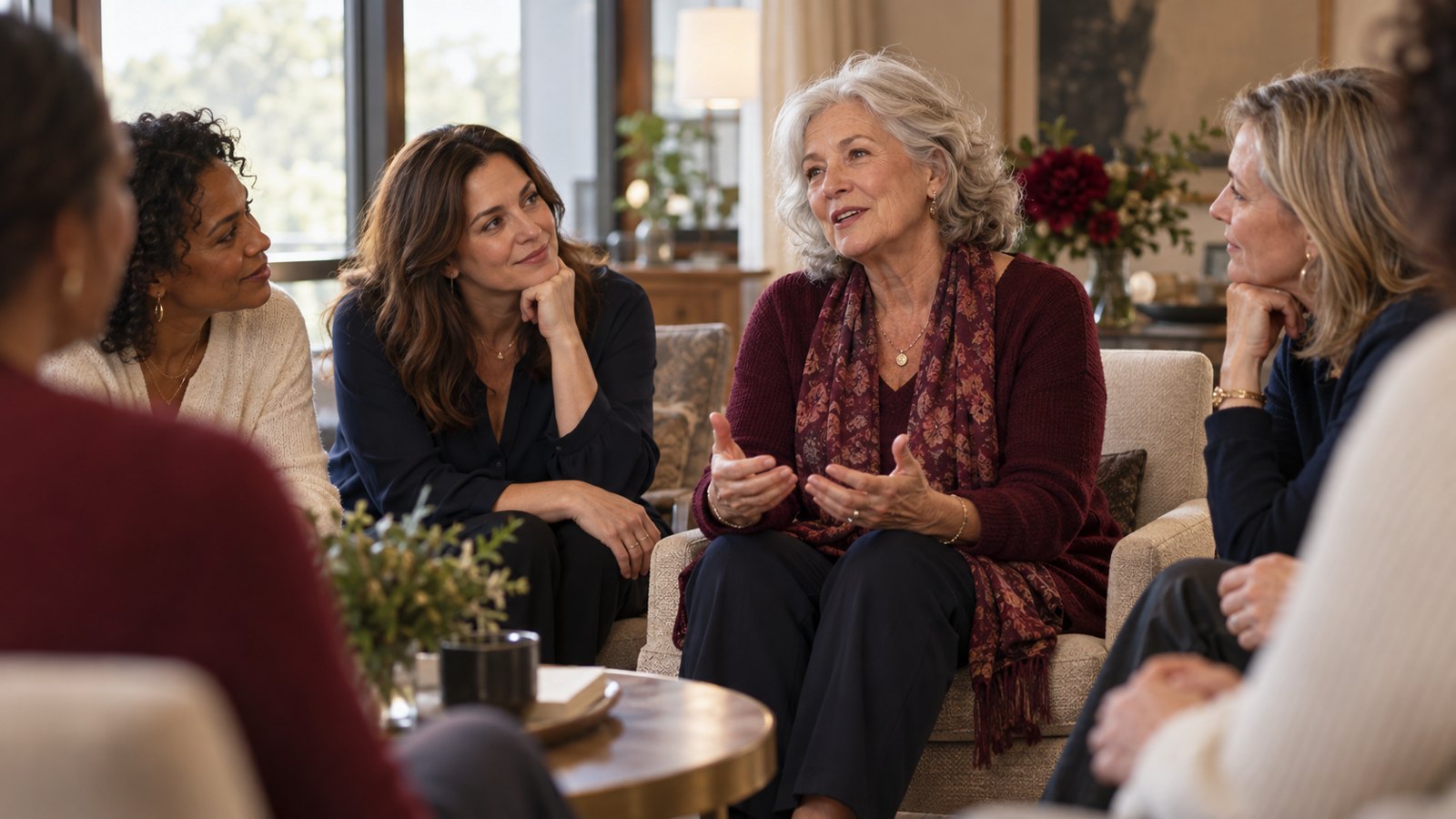
Four generations in the same room, in Lisbon. The younger ones think the older ones live to work. The older ones think the younger ones work to live.
That was the 16th Grande Conferência Liderança Feminina, Executiva’s women’s leadership conference, and this year’s theme was generations. For the first time, four of them share the same job market, and we heard from all of them.
I was there sharing the stage with Madalena Cordeiro Dias. And I want to thank Maria Serina and Isabel Canha for the invitation, but even more for the relationship we’ve built over the past year and the total creative freedom they give me in these columns, which I now write for you every fortnight.
Back to the generations, then.
I look at this and think the truth sits somewhere in the middle. As Isaac Newton put it: “If I have seen further, it is by standing on the shoulders of giants.” We are all standing on the shoulders of giants, and we forget to look down.
Every one of these four generations had a generation before it that had to break a lot of ground. For every woman who was the first in her family to get a degree, there were many others who fought, and rightly so, to study beyond the fourth grade. The women who fought for equal pay had others before them fighting for the right to vote and for a workplace that wasn’t the kitchen.
Before the many who fought for maternity leave and for the right not to lose their job or their promotion because they were the ones carrying the children (something biology still won’t let us delegate), came the women who won the right to be doctors and judges.
Some of these fights are still not won.
But one thing is clear to me: each generation had its own, and the ones who came after, because they no longer had to go through them, could afford the luxury of different fights.
The younger generations think Gen X didn’t “enjoy” motherhood, that it was too consumed by work. It was, yes. Thirty years ago, a pregnant woman’s worry was keeping her job and protecting her financial security, and her family’s. That security always had to come before any balance between home and work.
I think it’s great that people now think about quality of life with small children. You can only think about that because someone before you fought for everything else.
I heard younger women talk about the reaction at work when they have children “early”. I also heard Gen X women talk about infertility and the help science gave them to have children. In two situations so different, I see the same reaction from a society that loves to criticise women. Have children early, and you had them too soon. Have them late, and you’re irresponsible.
Mental health is part of the same story. Today we talk about work-life balance and quality of life. But before anyone could talk about burnout and exhaustion, someone had to put their foot down and strip away the stigma. There’s still some, though less.
In my generation I see many women talking out loud about menopause and endometriosis. In England I see extremely competent women leaving boards in their fifties, because menopause hit their cognitive capacity hard and they didn’t get hormone replacement therapy in time. They left because they literally thought they were losing their minds. Millennials and Gen Z, when they reach fifty, won’t go through this. Because someone spoke about it when it was uncomfortable, and someone complained in public until things moved forward.
We are all guilty of generalising.
But a generation is like a supermarket: there’s a bit of everything. Next time you roll your eyes at a colleague twenty years older, or twenty years younger, ask her what ground she had to break.
Another idea doing the rounds is that older women are stuck in the way things have always been done, closed to change and to technology. Funny, because my closest group of friends (all Gen X) is the exact opposite. They spend their lives opening new paths and new perspectives. The fact that something has always been done a certain way tells them nothing about how it will be done from now on, and they think everything needs revisiting every couple of years, if not sooner.
I’ve often heard that Gen Z doesn’t want to depend on a single job, and that it wants flexibility and control over what it produces and the life it leads, without being stuck in an office from eight to six. Trust me, we all want that, whatever our generation. At the same time, there’s huge ageism, and Gen X is afraid of being pushed aside, because in many companies anyone over fifty is already out of fashion.
Lots of people don’t want to retire, and for them stopping is a serious mental health and isolation problem. We’re living longer and we’ll need more and more income, and social security systems won’t be able to keep up. It’s time we started seeing work as something far more hybrid.
The future of work is, and has to be, intergenerational.
That old picture of retirement, the old man who leaves the office, goes home to read the paper, puts a blanket over his knees and watches the afternoon soap, no longer exists. In my family, those who retired went home under protest (and only at 70, the age limit for civil servants in Portugal) and kept working in every way they could.
For me, one of the biggest moments of the conference was meeting Helena Sacadura Cabral in person, the Portuguese economist and writer. I admire her for her professional path and her personal one, because I believe there’s no greater pain than losing a child. At almost 92 she’s still writing books and speaking in public, has almost a hundred thousand followers on LinkedIn, and announced there that she was going to change her life when she turned 91. A few months later, she wrote: “And I did!”
Here’s the photo. All of us sitting, like the children round the fire in the song by Portuguese singer Paulo de Carvalho, listening to Helena tell stories of these times and others. A memory I’ll keep for the rest of my life.
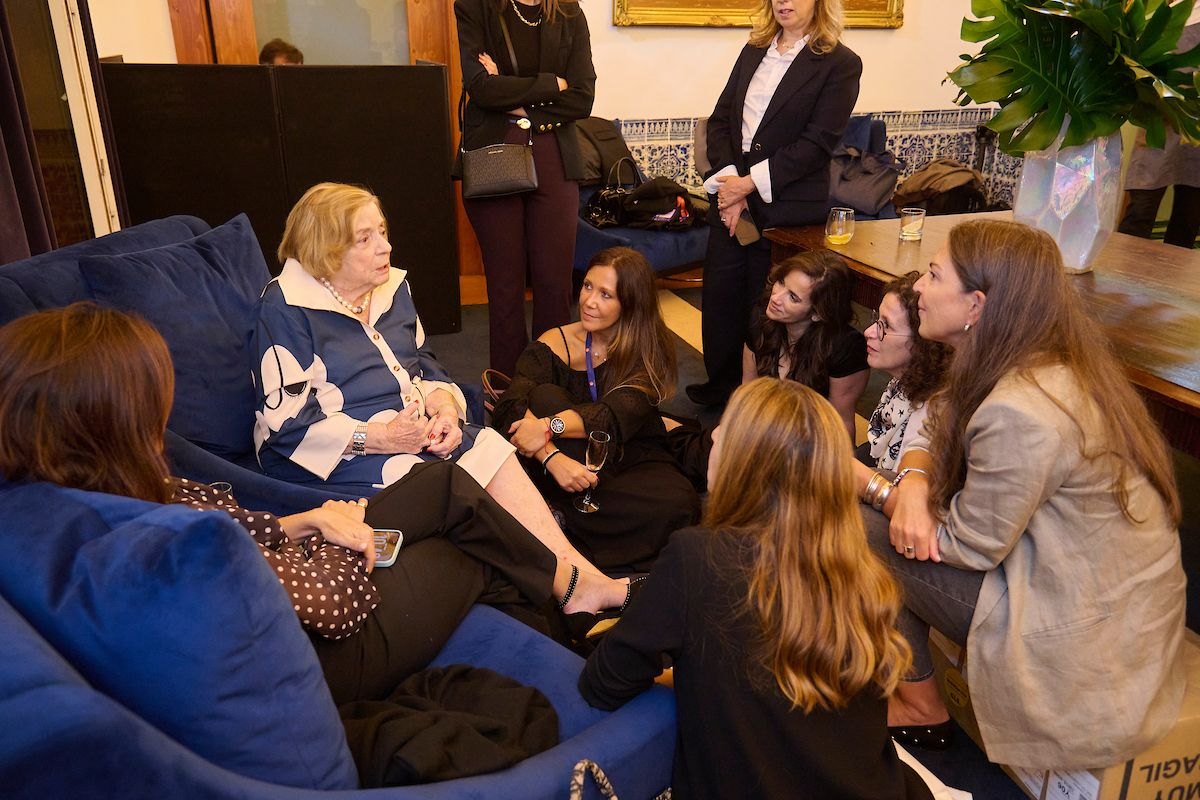
Here’s to more conferences like this one, so we can sit down and hear why each of us thinks the way she does, and the road she took to get here.
Gen Z, the ground you’re going to break is for my children’s generation, Gen Alpha. Break it well, because they’ll be sitting on your shoulders.
As for me, when I grow up, I want to be Helena Sacadura Cabral.
Comment below. What ground did the woman before you break so you didn’t have to? I read every response.
This article was first published in Portuguese in my weekly column Oh pá, não me lixem! for Executiva.